
 Image 1 of 3
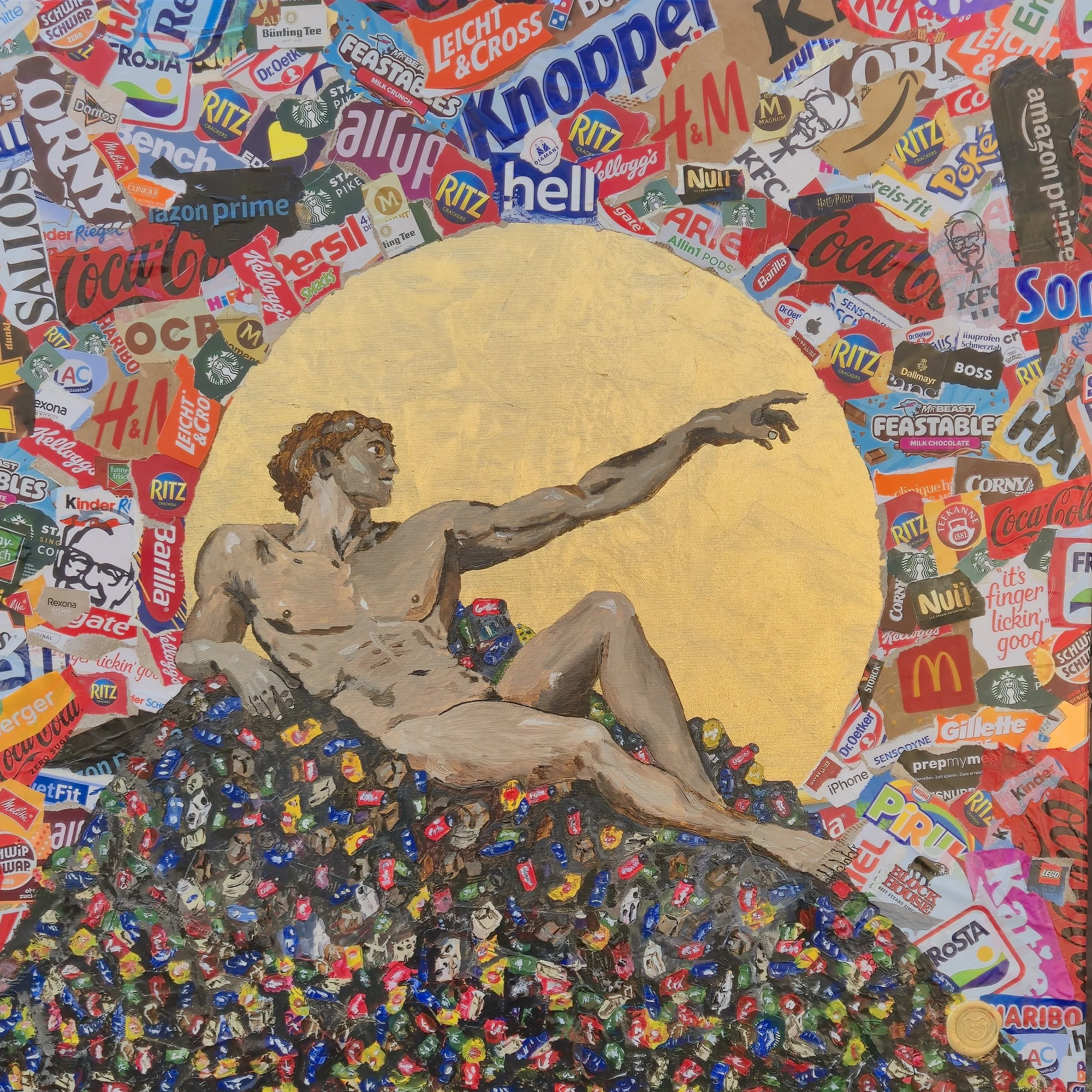 Image 2 of 3
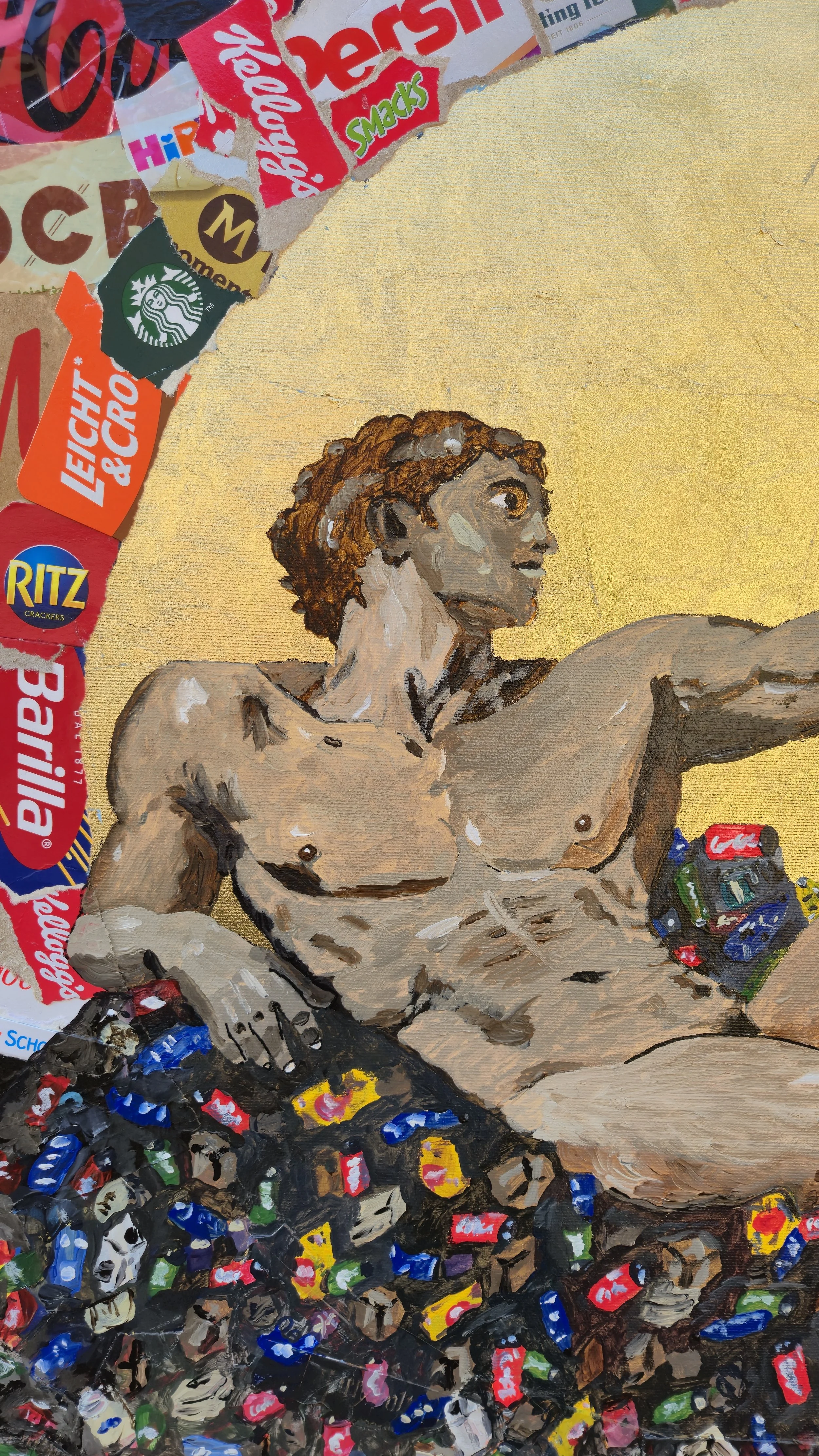 Image 3 of 3
What happens when the hand that once reached for God begins reaching for more?
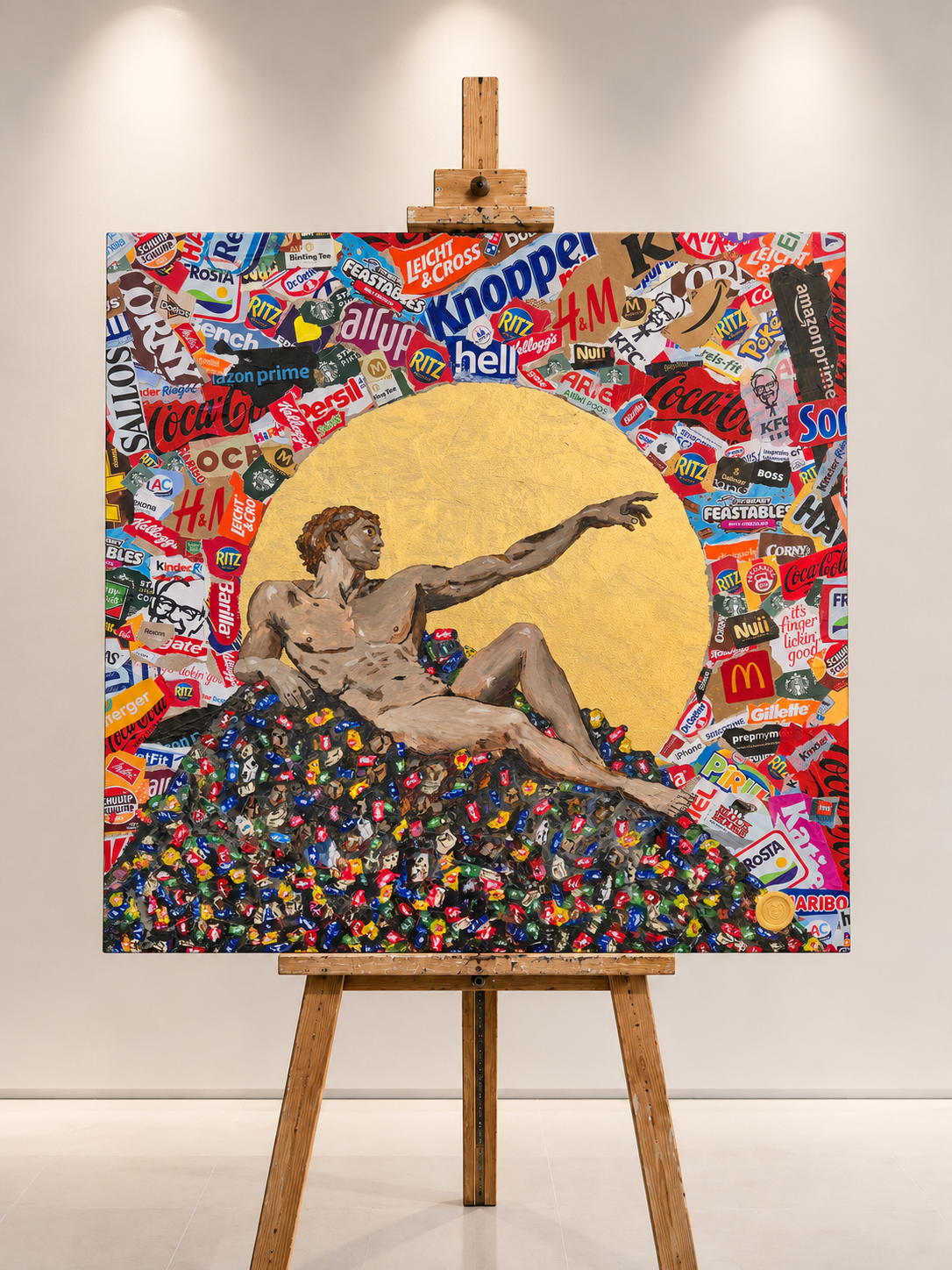
Still Reaching is the fourth work in Icons of Collapse, a series exploring how consumer culture shapes our myths, identities and sense of value.
At its center is one of the most recognizable gestures in art history.
The outstretched hand of Adam.
In Michelangelo’s The Creation of Adam, the almost-touching fingers of God and man represent the moment of creation — the transmission of life, consciousness and divine possibility.
It is an image of humanity receiving something extraordinary.
In Still Reaching, the gesture remains.
But something fundamental has changed.
God is gone.
And Adam is still reaching.
What once symbolized the gift of life has become a gesture of endless desire. The space between Adam's fingers and the divine has been occupied by the objects of consumer culture.
The sacred has given way to the disposable.
The promise of creation has become the promise of consumption.
And the hand that once reached toward the source of life now reaches for something that can be bought, used and replaced.
We have everything. Yet we keep reaching.
The discarded packaging surrounding Adam is not merely painted or represented. It physically enters the work: real fragments of consumer culture embedded in an image that once represented humanity's divine origins.
Behind him, the recurring golden circle of Icons of Collapse transforms Adam into a contemporary icon. Gold — historically associated with divinity, eternity and the sacred — meets materials designed for fleeting attention and almost immediate disposal.
The contradiction is deliberate.
Because Still Reaching is not simply about religion or the loss of faith.
It is about what we have chosen to worship instead.
For centuries, humanity has searched for meaning in creation, spirituality, knowledge and connection. Today, much of that search is increasingly redirected toward acquisition.
The next product.
The next upgrade.
The next promise of happiness.
Every desire fulfilled creates room for another.
And somewhere along the way, wanting more has become almost indistinguishable from being alive.
But what if the distance between Adam's fingers and what he reaches for can never truly be closed?
What if the emptiness is not a problem consumption can solve, but the very condition that keeps it alive?
As the fourth chapter of Icons of Collapse, Still Reaching turns the series toward the origins of human desire.
Where Self Destruct questions what happens when our ideals begin to consume themselves, Overload confronts the growing weight of what our progress leaves behind, and New Frontier asks whether we can escape our habits by escaping our world, Still Reaching examines the impulse that drives it all.
The belief that something more is always waiting just beyond our fingertips.
Adam was once reaching for life.
Now he is reaching for more.
And perhaps the most uncomfortable question is no longer what we are reaching for.
It is why we never stop.
STILL REACHING
Icons of Collapse · No. 4
2026
Original artwork · Unique work (1/1)
Acrylic, discarded packaging & metal leaf on canvas
Canvas on wooden stretcher frame
80 × 80 × 4 cm
31.5 × 31.5 × 1.6 in