
 Image 1 of 3
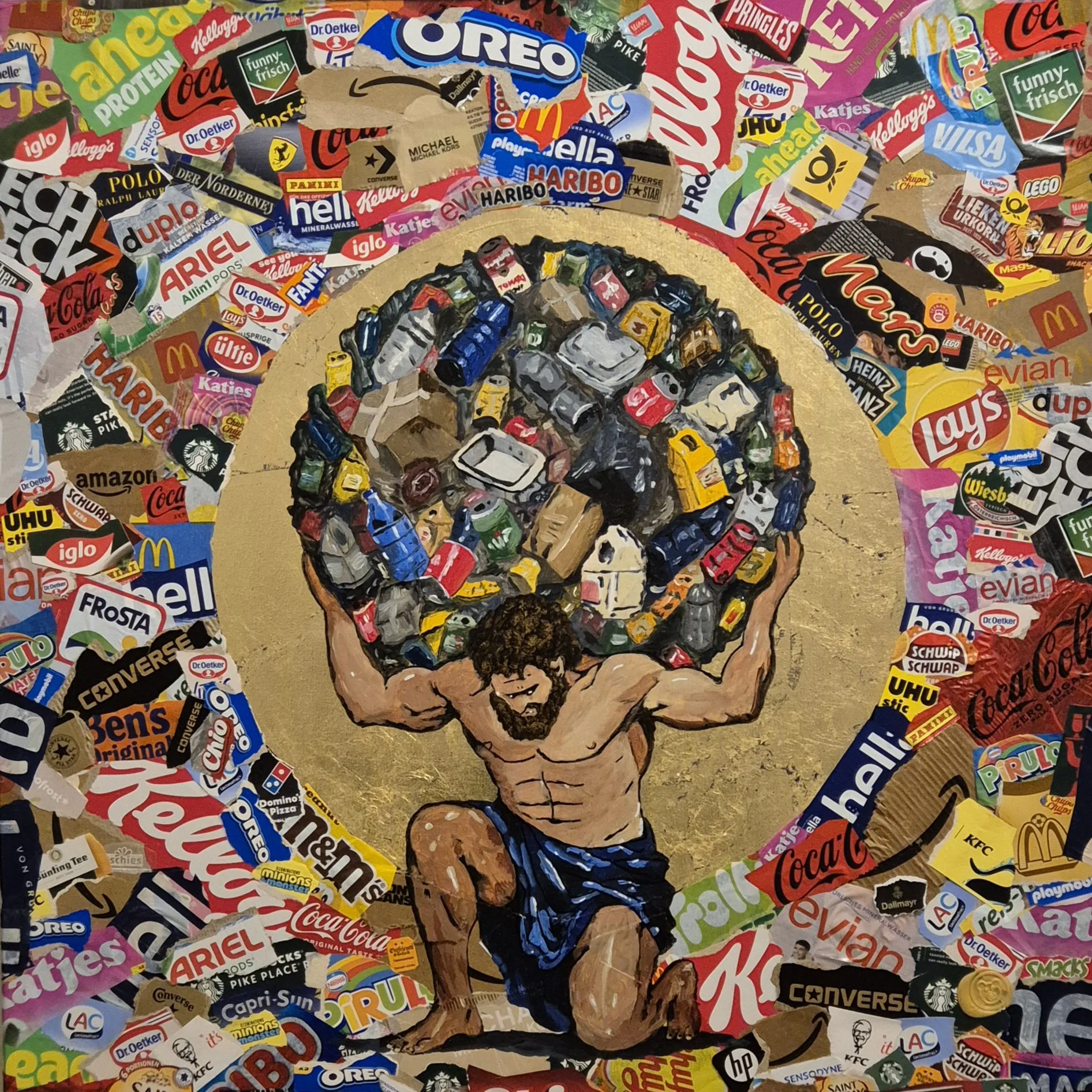 Image 2 of 3
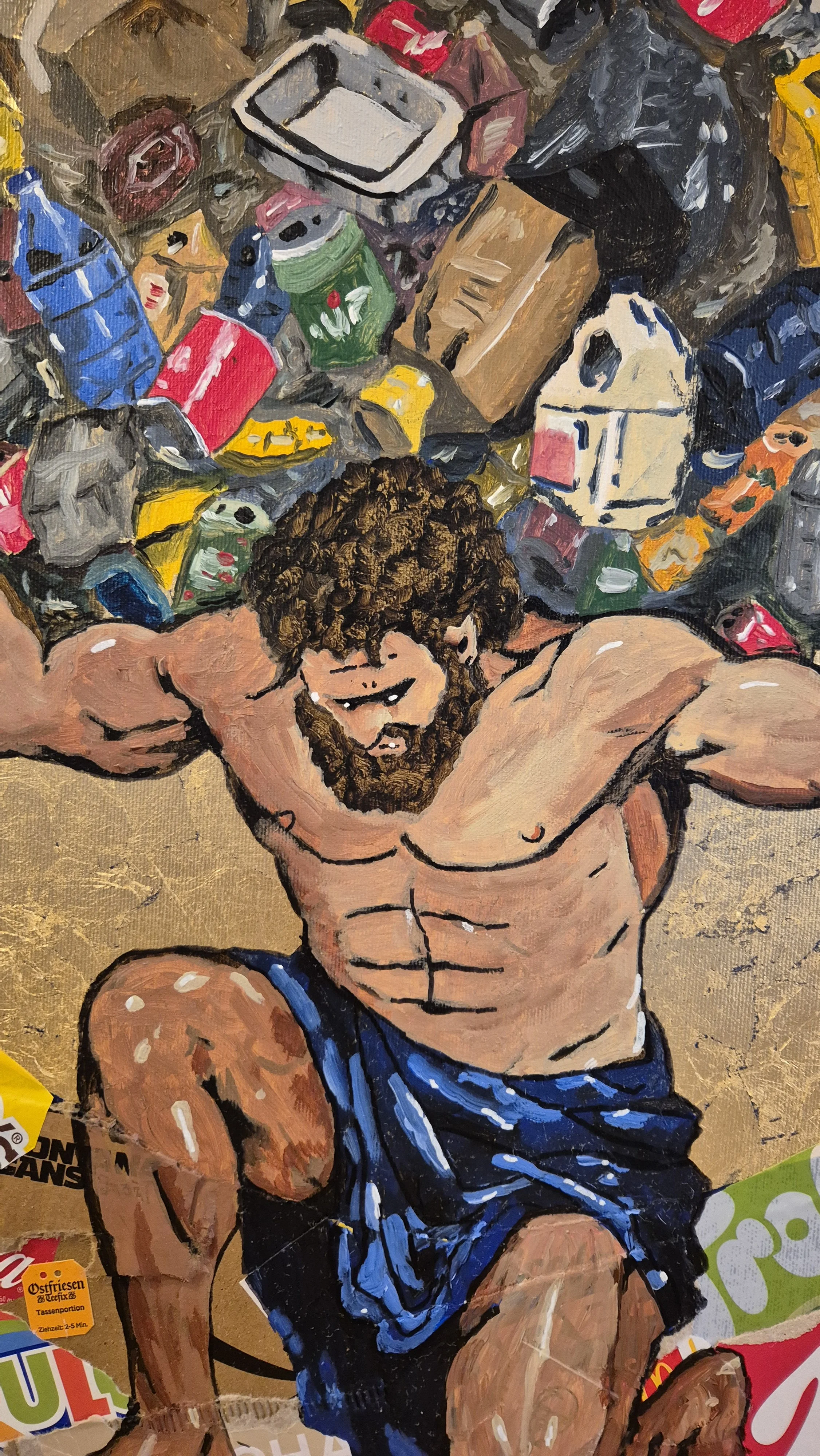 Image 3 of 3
How much can we carry before progress becomes a burden?
Overload is the second work in Icons of Collapse, a series exploring how consumer culture shapes our myths, identities and sense of value.
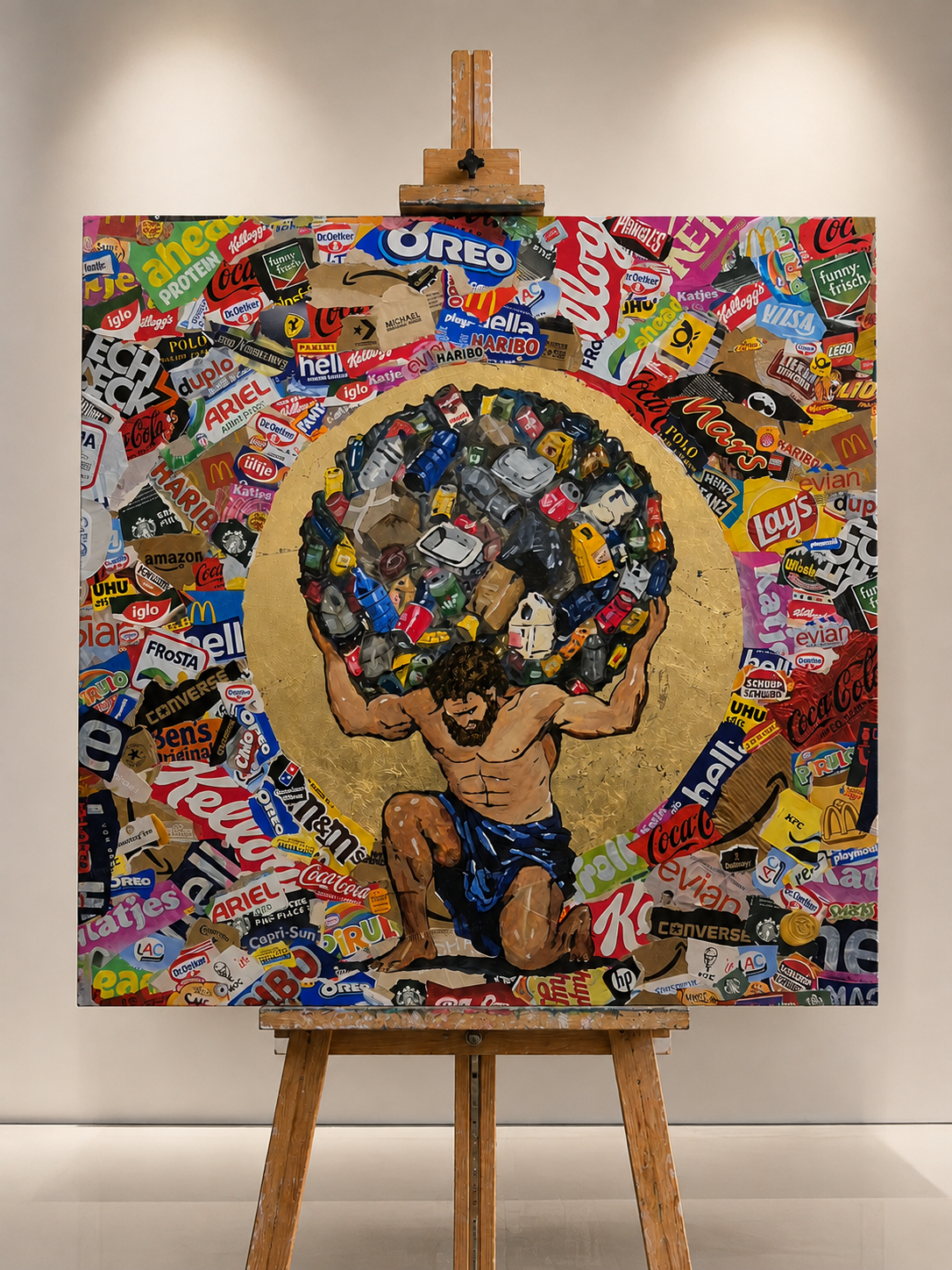
At its center stands Atlas.
For centuries, he has been depicted carrying the heavens on his shoulders — an enduring symbol of strength, responsibility and impossible burden.
But in Overload, Atlas no longer carries the world.
He carries what we have made of it.
Above him rises an enormous sphere of discarded packaging: boxes, labels, wrappers and fragments of everyday consumption compressed into a new kind of planet.
Atlas is still holding it.
But he is on his knees.
The distinction matters.
Overload is not simply an image of collapse. It captures the moment before it — that uncomfortable point at which the weight has become almost unbearable, yet somehow we continue to carry it.
More products.
More convenience.
More choice.
More consumption.
And inevitably: more remains.
The materials surrounding Atlas are not representations of waste. They are waste — fragments of objects designed, purchased, opened and discarded, now physically transformed into the world he is forced to carry.
Behind him, the recurring golden circle of Icons of Collapse gives the scene an almost sacred quality. Gold traditionally represents permanence, value and transcendence. Here, it exists alongside materials whose intended lifespan may have been measured in days or even minutes.
That contradiction raises a simple question:
When did having more become carrying more?
As the second chapter of Icons of Collapse, Overload continues the conversation begun by Self Destruct.
Where Self Destruct confronts the erosion of the ideals we once built to endure, Overload turns toward the consequences of the world we have built around them.
But Atlas has not fallen.
Not yet.
Perhaps he will collapse beneath the weight.
Perhaps he will find a way to put it down.
Or perhaps we will simply add one more thing.
OVERLOAD
Icons of Collapse · No. 2
2026
Original artwork · Unique work (1/1)
Acrylic, discarded packaging & metal leaf on canvas
Canvas on wooden stretcher frame
80 × 80 × 4 cm
31.5 × 31.5 × 1.6 in
How much can we carry before progress becomes a burden?
Overload is the second work in Icons of Collapse, a series exploring how consumer culture shapes our myths, identities and sense of value.
At its center stands Atlas.
For centuries, he has been depicted carrying the heavens on his shoulders — an enduring symbol of strength, responsibility and impossible burden.
But in Overload, Atlas no longer carries the world.
He carries what we have made of it.
Above him rises an enormous sphere of discarded packaging: boxes, labels, wrappers and fragments of everyday consumption compressed into a new kind of planet.
Atlas is still holding it.
But he is on his knees.
The distinction matters.
Overload is not simply an image of collapse. It captures the moment before it — that uncomfortable point at which the weight has become almost unbearable, yet somehow we continue to carry it.
More products.
More convenience.
More choice.
More consumption.
And inevitably: more remains.
The materials surrounding Atlas are not representations of waste. They are waste — fragments of objects designed, purchased, opened and discarded, now physically transformed into the world he is forced to carry.
Behind him, the recurring golden circle of Icons of Collapse gives the scene an almost sacred quality. Gold traditionally represents permanence, value and transcendence. Here, it exists alongside materials whose intended lifespan may have been measured in days or even minutes.
That contradiction raises a simple question:
When did having more become carrying more?
As the second chapter of Icons of Collapse, Overload continues the conversation begun by Self Destruct.
Where Self Destruct confronts the erosion of the ideals we once built to endure, Overload turns toward the consequences of the world we have built around them.
But Atlas has not fallen.
Not yet.
Perhaps he will collapse beneath the weight.
Perhaps he will find a way to put it down.
Or perhaps we will simply add one more thing.
OVERLOAD
Icons of Collapse · No. 2
2026
Original artwork · Unique work (1/1)
Acrylic, discarded packaging & metal leaf on canvas
Canvas on wooden stretcher frame
80 × 80 × 4 cm
31.5 × 31.5 × 1.6 in