
 Image 1 of 3
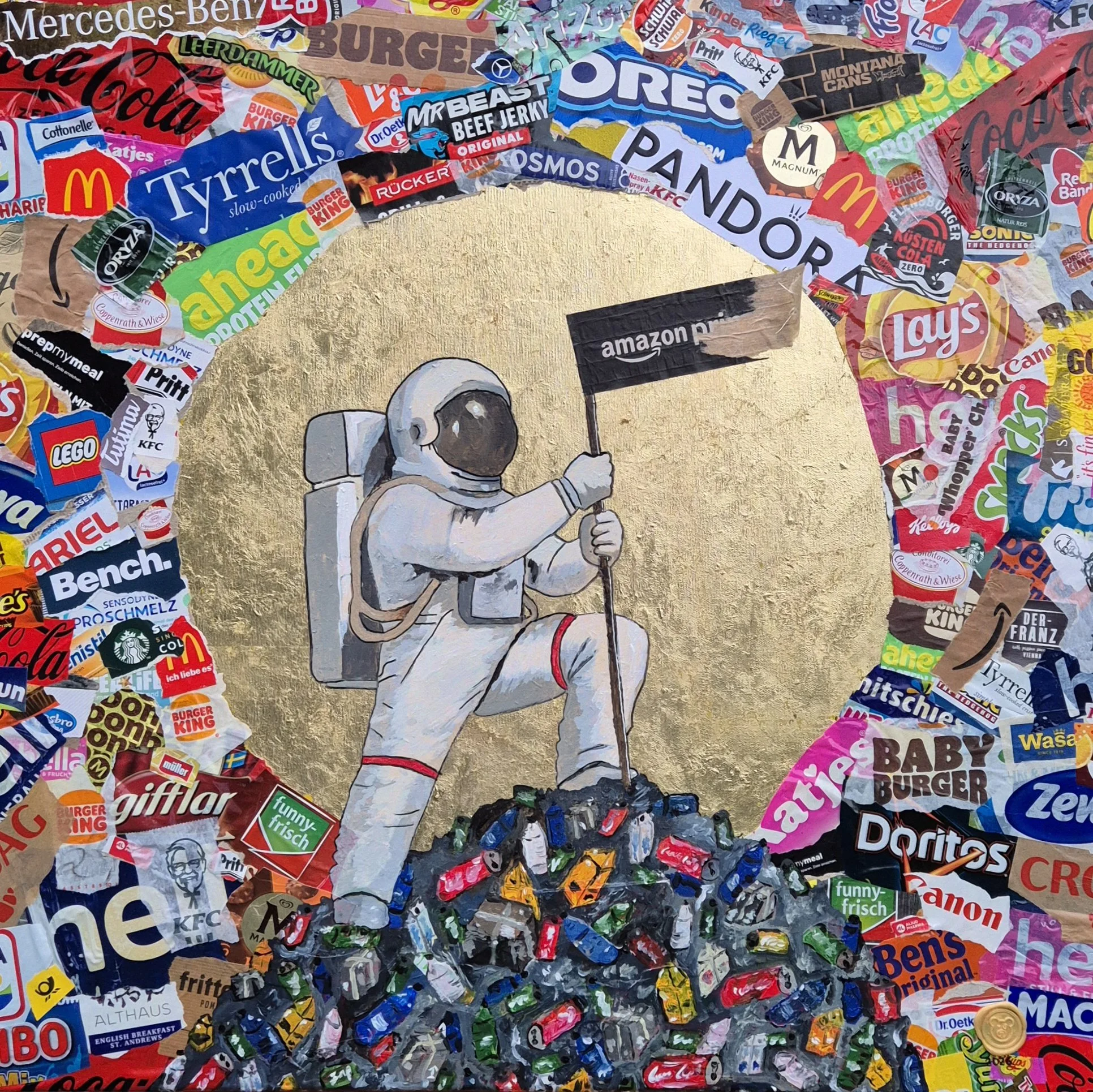 Image 2 of 3
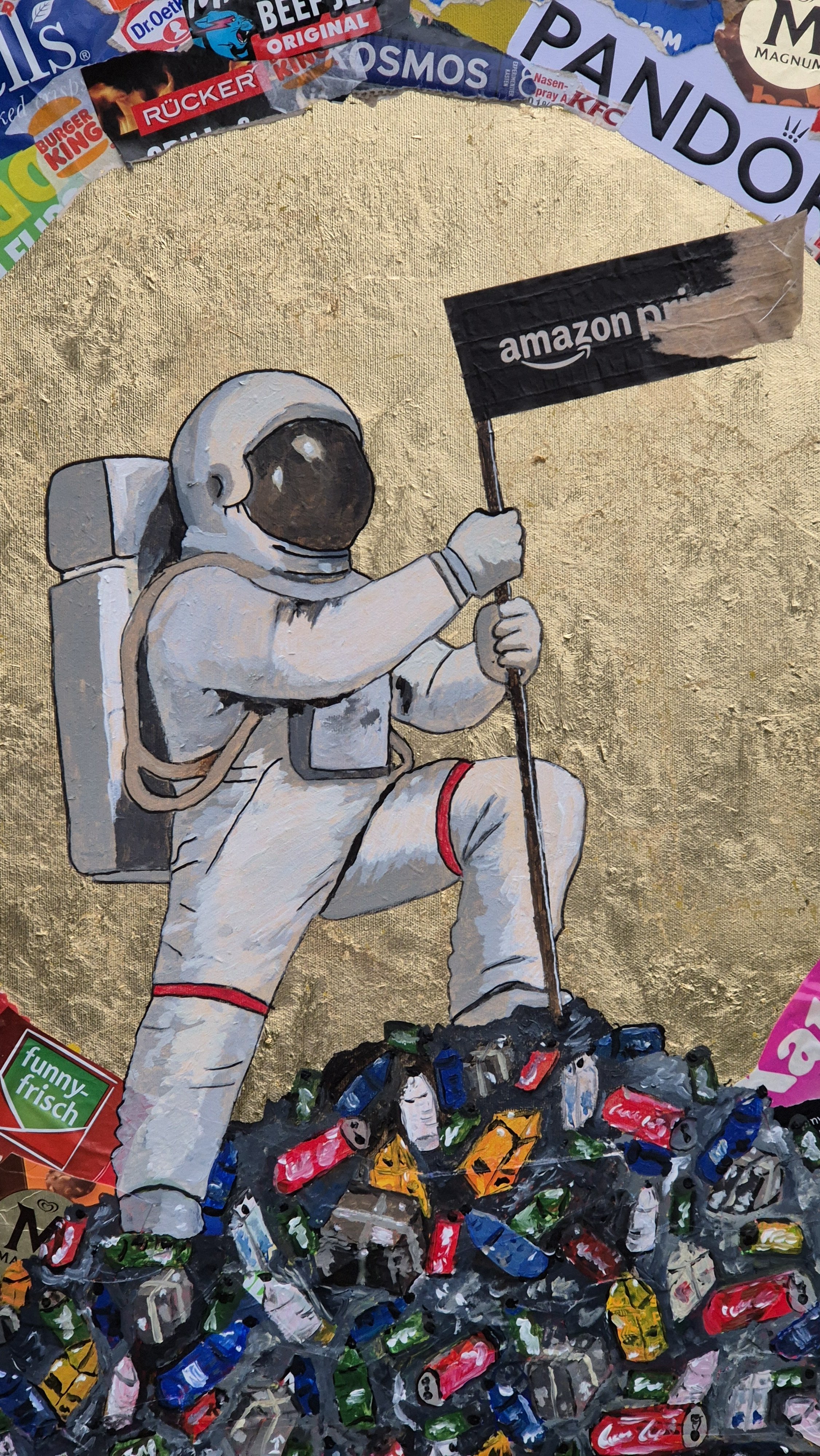 Image 3 of 3
What if reaching a new world only means bringing the old one with us?
New Frontier is the third work in Icons of Collapse, a series exploring how consumer culture shapes our myths, identities and sense of value.
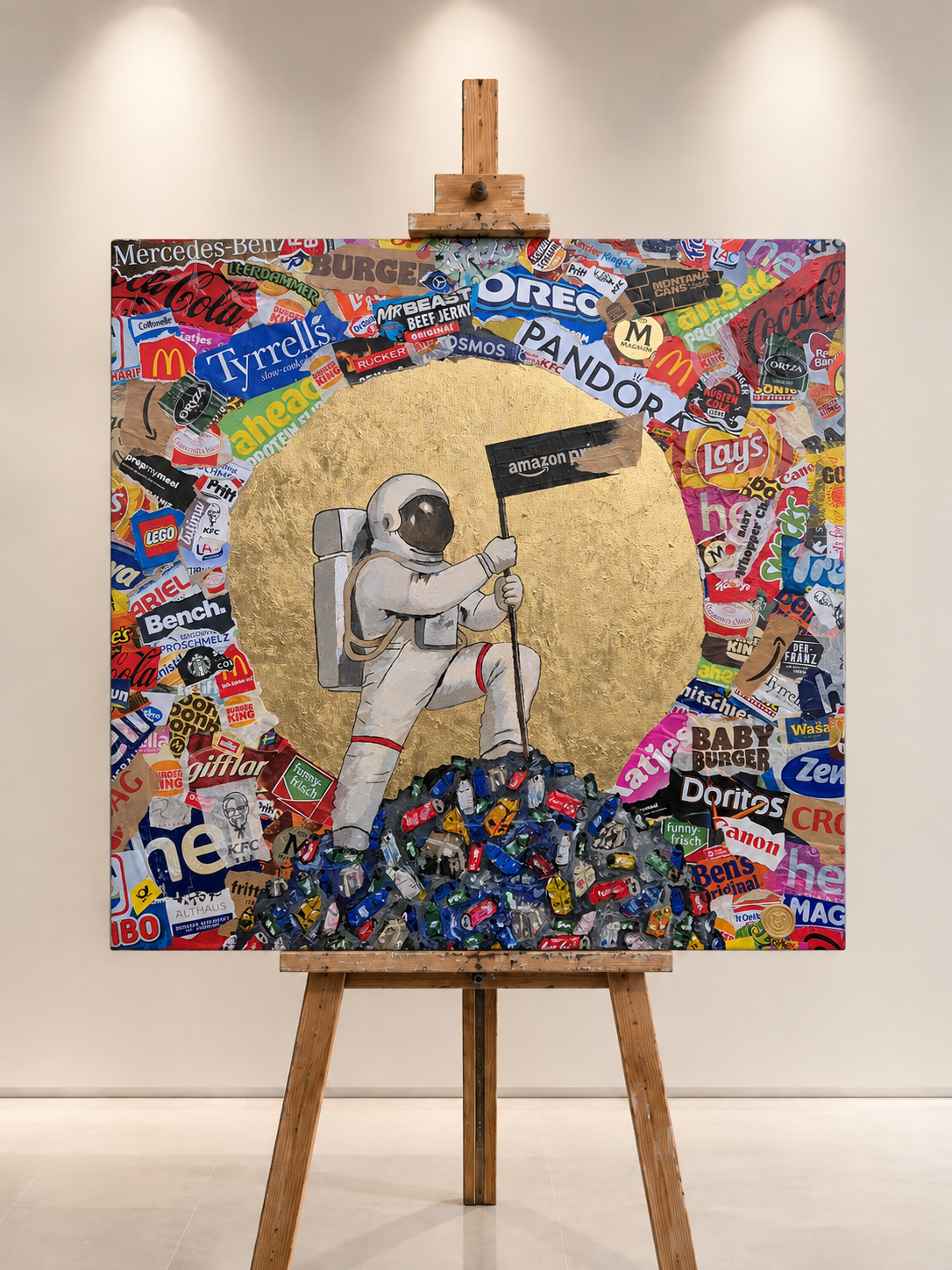
At its center stands an astronaut.
For generations, the astronaut has embodied one of humanity’s most powerful ideas of progress: exploration, discovery and the possibility of going beyond the limits of the world we already know.
In New Frontier, he has made it.
He stands on another planet.
But he did not arrive alone.
We brought everything with us.
Beneath his feet lies a landscape already covered in the remains of consumption — bottles, containers and discarded objects accumulating on a world that was supposed to represent a new beginning.
And instead of planting the flag of a nation, the astronaut raises another familiar symbol.
The gesture echoes one of the defining images of human exploration — planting a flag on newly reached territory. But here, discovery and consumption have become almost impossible to separate.
A new world becomes a new market.
A new frontier becomes a new destination.
And progress carries its waste with it.
The discarded packaging surrounding the astronaut is not merely painted or represented. It physically enters the work: real fragments of consumer culture transformed into the landscape of humanity’s imagined future.
Behind him, the recurring golden circle of Icons of Collapse gives the astronaut the appearance of a contemporary icon. Gold — historically associated with permanence, divinity and objects worthy of preservation — meets materials created to be consumed and discarded almost immediately.
The contradiction is deliberate.
Because New Frontier is not really about space.
It is about the belief that somewhere else will save us from what we refuse to change here.
Human history is filled with frontiers — new territories, new technologies, new markets, new promises of abundance. Again and again, progress offers the possibility of beginning differently.
But what happens if our habits travel faster than our ideals?
The astronaut has reached the future.
The waste is already there.
As the third chapter of Icons of Collapse, New Frontier expands the series beyond the world we inhabit today.
Where Self Destruct questions what happens when our ideals begin to consume themselves, and Overload confronts the growing weight of what our progress leaves behind, New Frontier asks whether escape is possible without transformation.
Perhaps humanity will one day reach another world.
The more uncomfortable question is:
Will we discover something new — or simply find another place to consume?
NEW FRONTIER
Icons of Collapse · No. 3
2026
Original artwork · Unique work (1/1)
Acrylic, discarded packaging & metal leaf on canvas
Canvas on wooden stretcher frame
80 × 80 × 4 cm
31.5 × 31.5 × 1.6 in
What if reaching a new world only means bringing the old one with us?
New Frontier is the third work in Icons of Collapse, a series exploring how consumer culture shapes our myths, identities and sense of value.
At its center stands an astronaut.
For generations, the astronaut has embodied one of humanity’s most powerful ideas of progress: exploration, discovery and the possibility of going beyond the limits of the world we already know.
In New Frontier, he has made it.
He stands on another planet.
But he did not arrive alone.
We brought everything with us.
Beneath his feet lies a landscape already covered in the remains of consumption — bottles, containers and discarded objects accumulating on a world that was supposed to represent a new beginning.
And instead of planting the flag of a nation, the astronaut raises another familiar symbol.
The gesture echoes one of the defining images of human exploration — planting a flag on newly reached territory. But here, discovery and consumption have become almost impossible to separate.
A new world becomes a new market.
A new frontier becomes a new destination.
And progress carries its waste with it.
The discarded packaging surrounding the astronaut is not merely painted or represented. It physically enters the work: real fragments of consumer culture transformed into the landscape of humanity’s imagined future.
Behind him, the recurring golden circle of Icons of Collapse gives the astronaut the appearance of a contemporary icon. Gold — historically associated with permanence, divinity and objects worthy of preservation — meets materials created to be consumed and discarded almost immediately.
The contradiction is deliberate.
Because New Frontier is not really about space.
It is about the belief that somewhere else will save us from what we refuse to change here.
Human history is filled with frontiers — new territories, new technologies, new markets, new promises of abundance. Again and again, progress offers the possibility of beginning differently.
But what happens if our habits travel faster than our ideals?
The astronaut has reached the future.
The waste is already there.
As the third chapter of Icons of Collapse, New Frontier expands the series beyond the world we inhabit today.
Where Self Destruct questions what happens when our ideals begin to consume themselves, and Overload confronts the growing weight of what our progress leaves behind, New Frontier asks whether escape is possible without transformation.
Perhaps humanity will one day reach another world.
The more uncomfortable question is:
Will we discover something new — or simply find another place to consume?
NEW FRONTIER
Icons of Collapse · No. 3
2026
Original artwork · Unique work (1/1)
Acrylic, discarded packaging & metal leaf on canvas
Canvas on wooden stretcher frame
80 × 80 × 4 cm
31.5 × 31.5 × 1.6 in